San Francisco SLAM

Structural Localization and Mapping Beyond the Manhattan World

Under Review · IEEE Transactions on Robotics (T-RO) 2026

Anonymous Authors
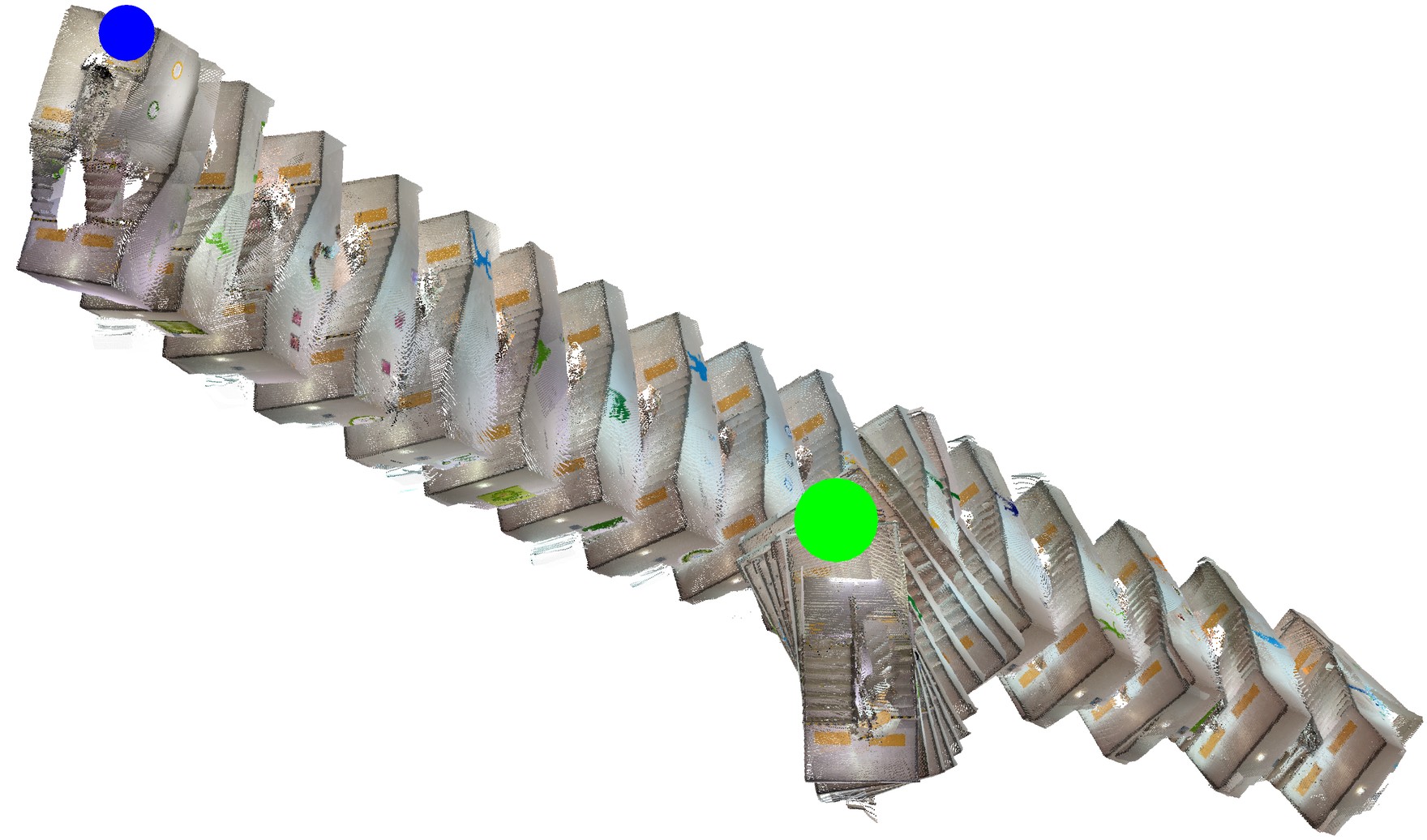
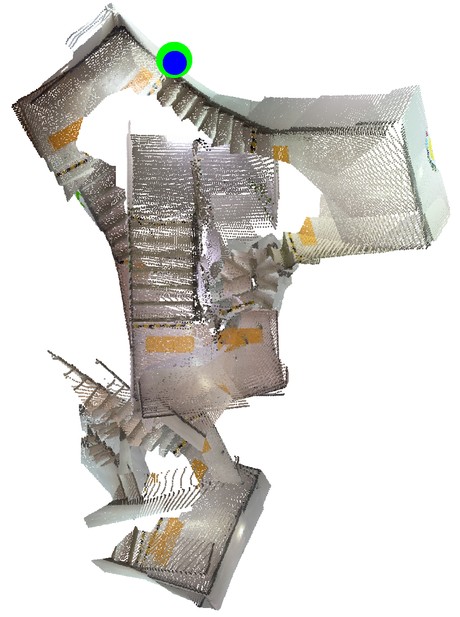
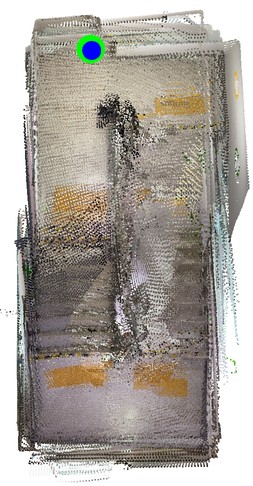
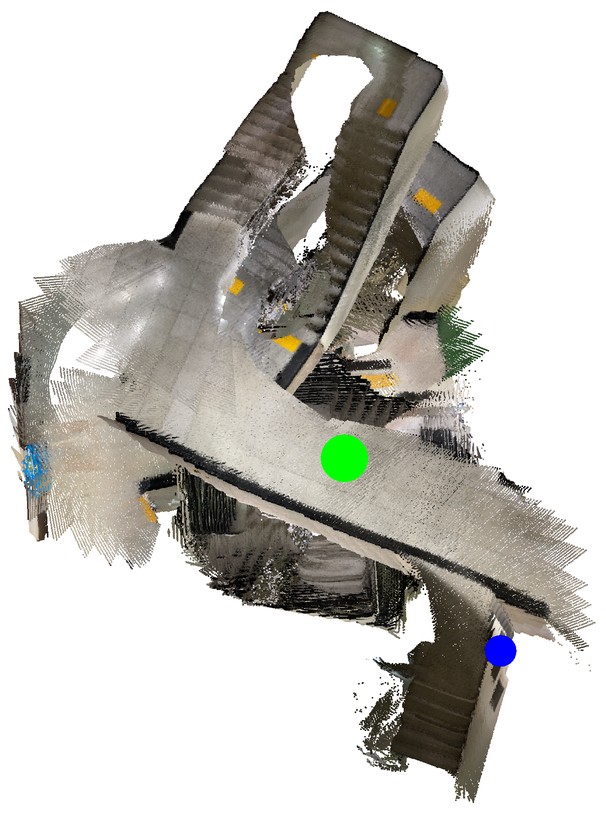
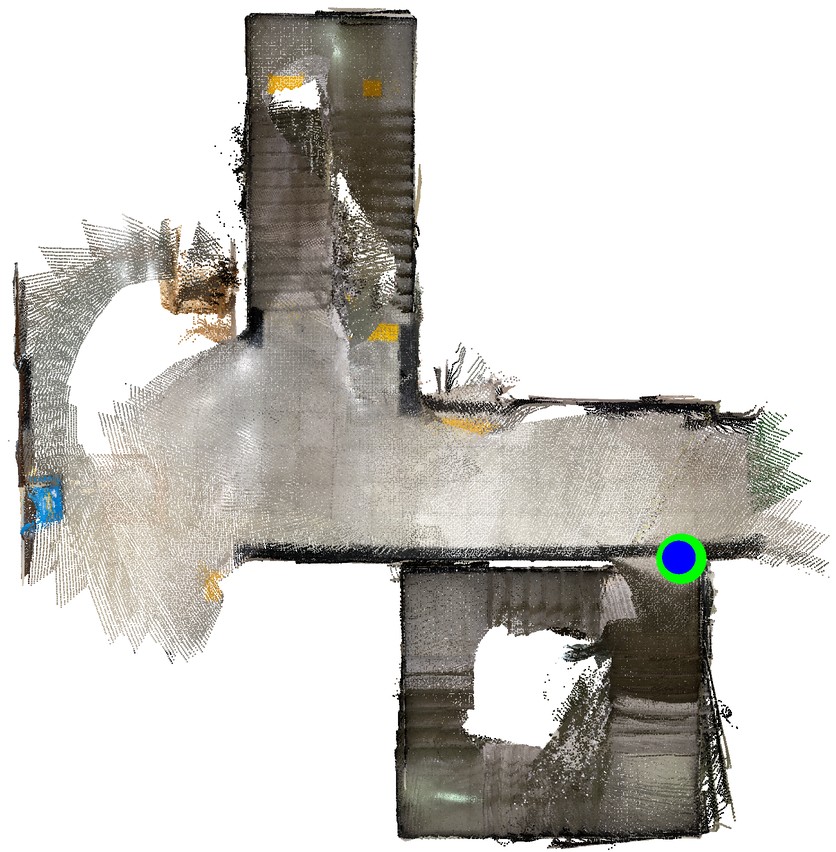
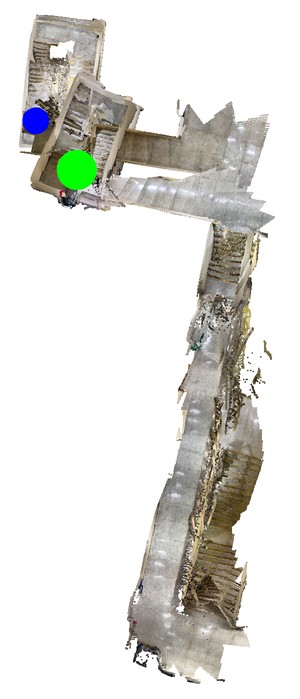
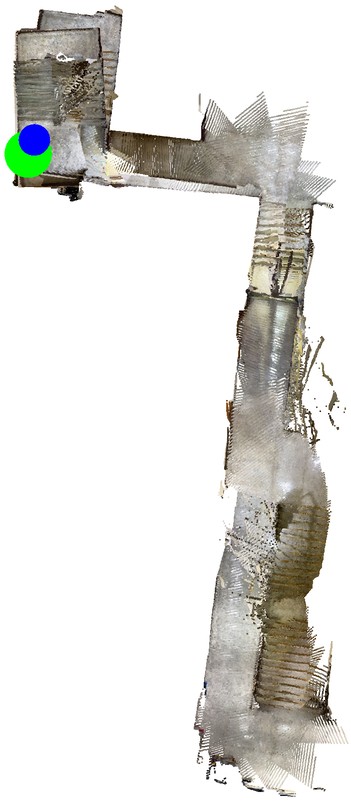
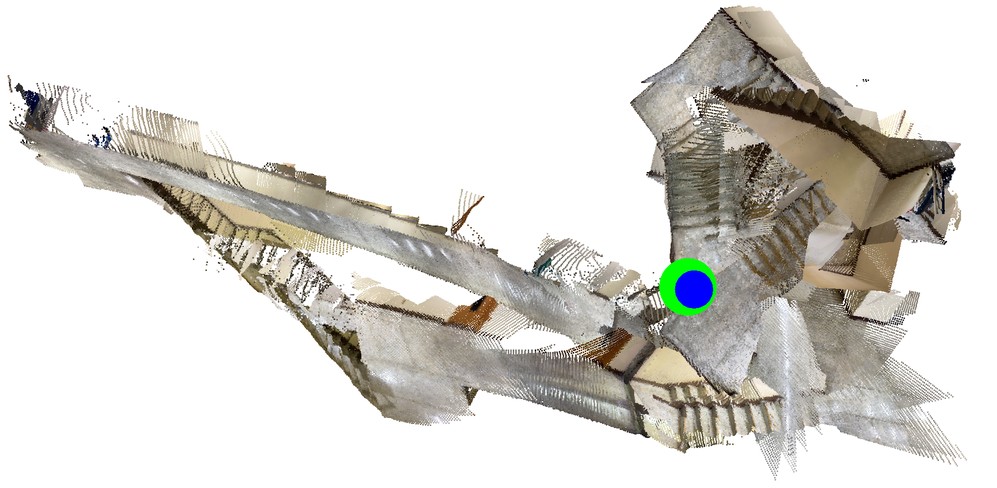
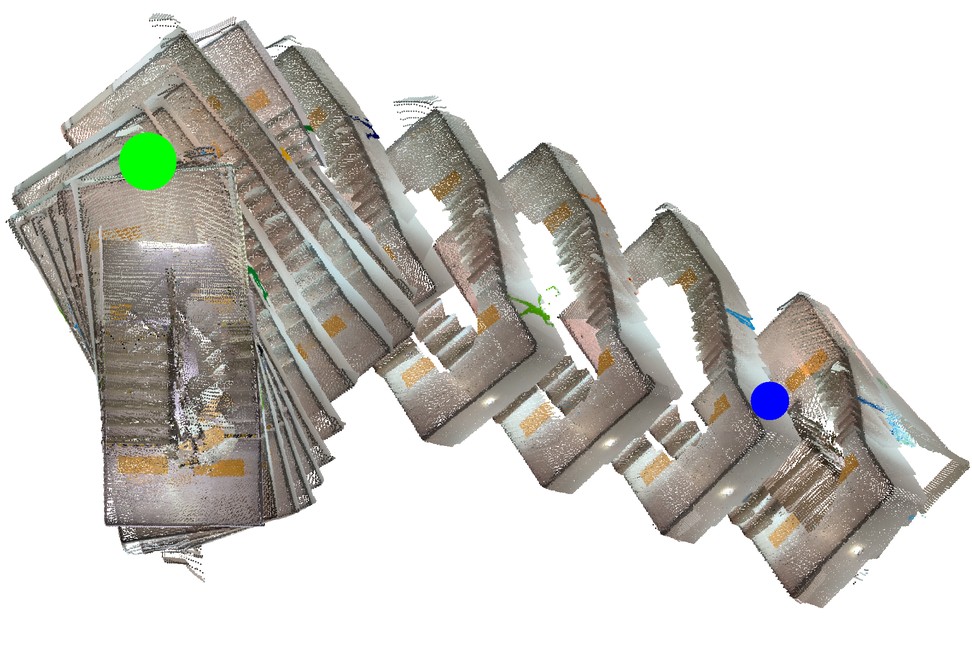
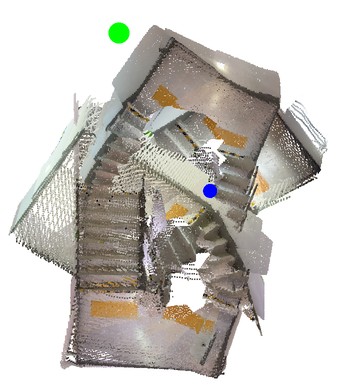
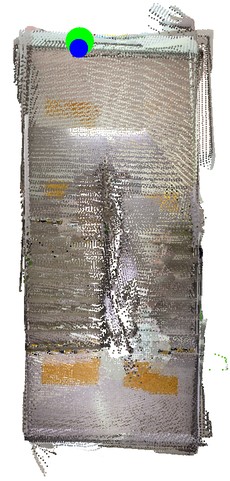
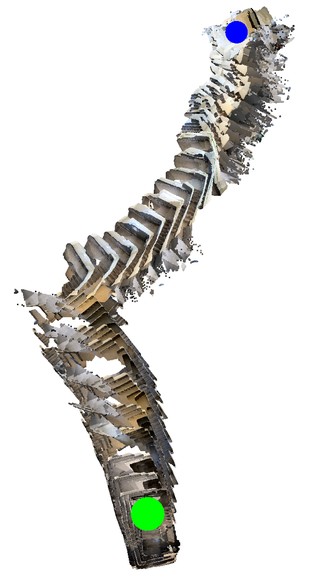
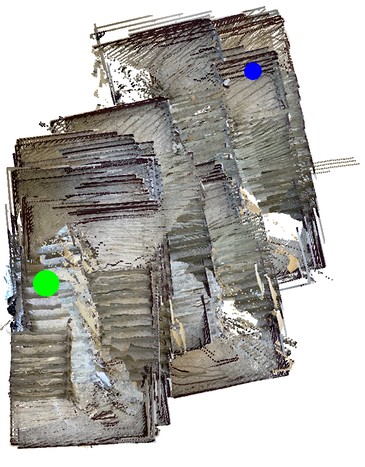
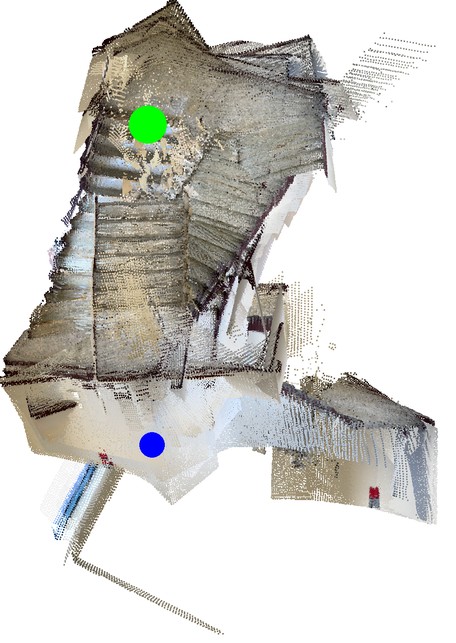
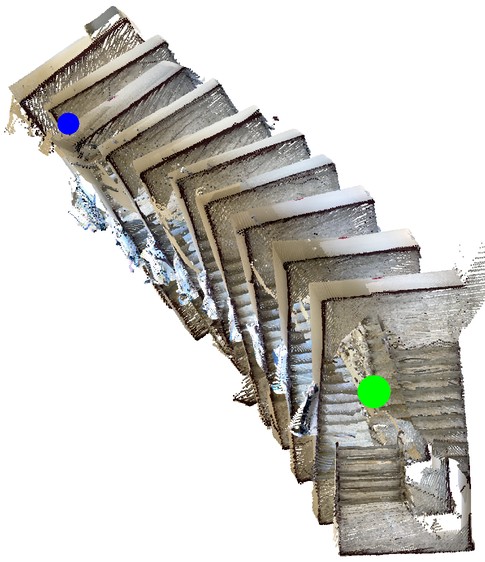
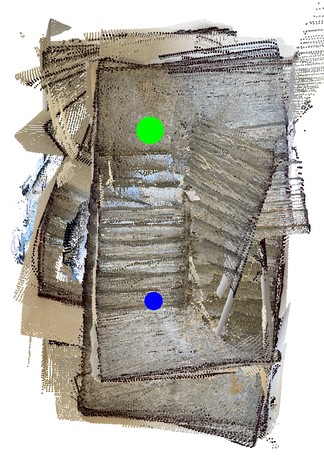
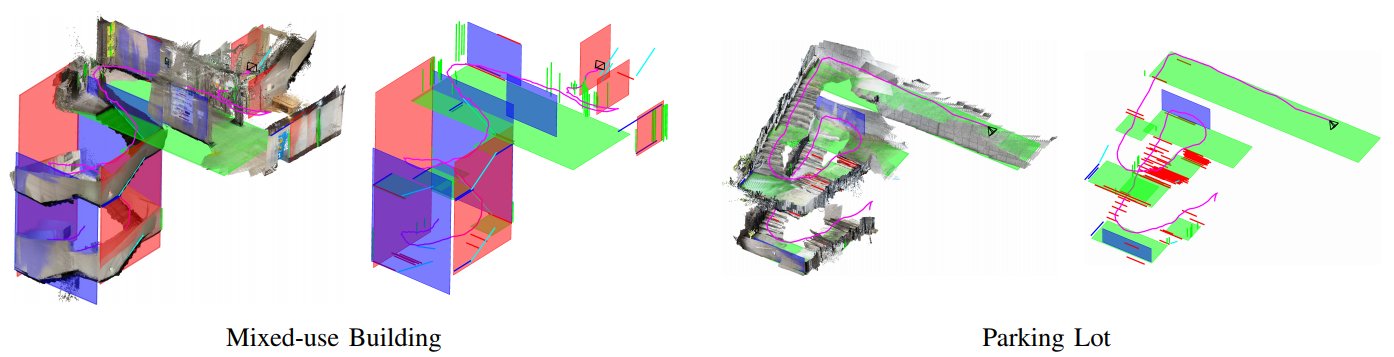
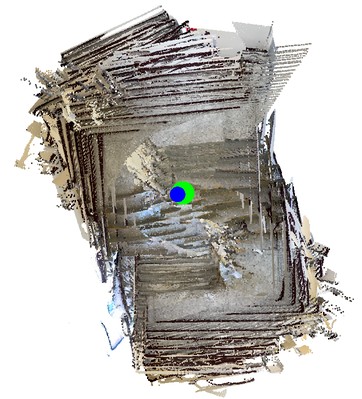
Figure 1. SF-SLAM building its plane and line map while climbing a multi-story staircase.

TL;DR: Staircases and inter-floor transitions break the Manhattan world and make structural SLAM drift. SF-SLAM uses the San Francisco world to anchor a drift-free rotation and tracks planes and sloping lines with a single linear Kalman filter.

Abstract

We present San Francisco SLAM (SF-SLAM), a structural RGB-D SLAM algorithm for accurate 6-DoF camera localization and mapping in geometrically complex structured environments. Existing visual SLAM methods often fail in textureless and repetitive scenes because feature scarcity and spatial ambiguity cause cumulative trajectory drift and tracking loss. These failures become more severe in staircases and inter-floor spaces, where repeated layouts and sloping structures fall outside the assumptions of the Manhattan world. To address these problems, we detect planes and lines to build a reliable global San Francisco world (SFW) map while simultaneously estimating 6-DoF camera poses, capturing structural regularities beyond orthogonal layouts. Anchoring orientation with structure-consistent absolute-rotation estimates removes rotation from the state and reduces planes and lines to 1-D invariant coordinates, yielding linear measurement models for camera translation and the global map. Our approach leverages both inter-floor plane and line regularities to preserve trajectory consistency in environments that violate the Manhattan world assumption. Our experiments in various SFW-structured scenes show that our approach effectively reduces the accumulated drift during inter-floor transitions and outperforms state-of-the-art SLAM methods in challenging real-world environments.
Supplementary Video

Full run of SF-SLAM on the dataset sequences, compared with StructVIO, DROID-SLAM, ORB-SLAM3, HI-SLAM2, and Planar-SLAM.

Method

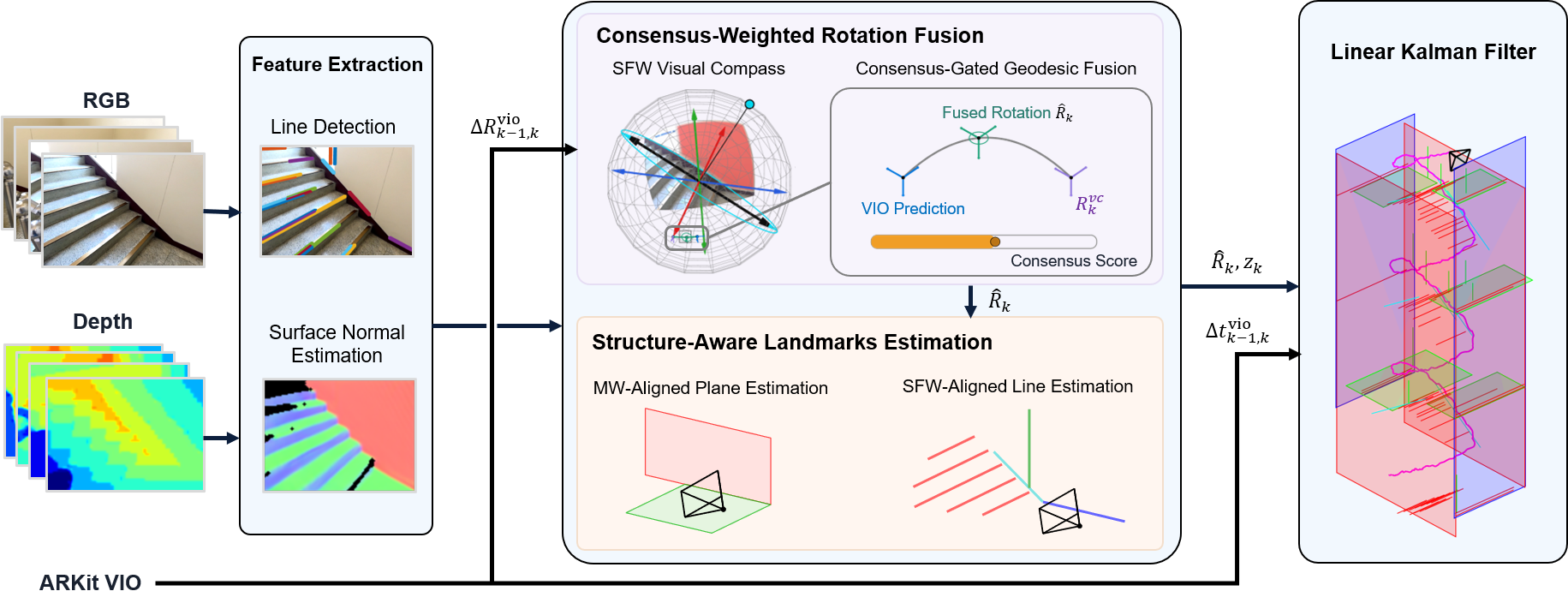
The San Francisco world adds four sloping directions to the Manhattan triad. SF-SLAM fuses VIO rotation with a drift-free SFW Visual Compass and rejects inconsistent compass estimates with a long-baseline consensus test. With rotation fixed, each plane and line reduces to a 1-D coordinate, so a single linear Kalman filter estimates the translation and the map.

Overview of the proposed SF-SLAM pipeline
Figure 2. SF-SLAM pipeline: line and surface-normal extraction, consensus-weighted rotation fusion, structure-aware plane and line estimation, and a linear Kalman filter.

SF-SLAM Dataset

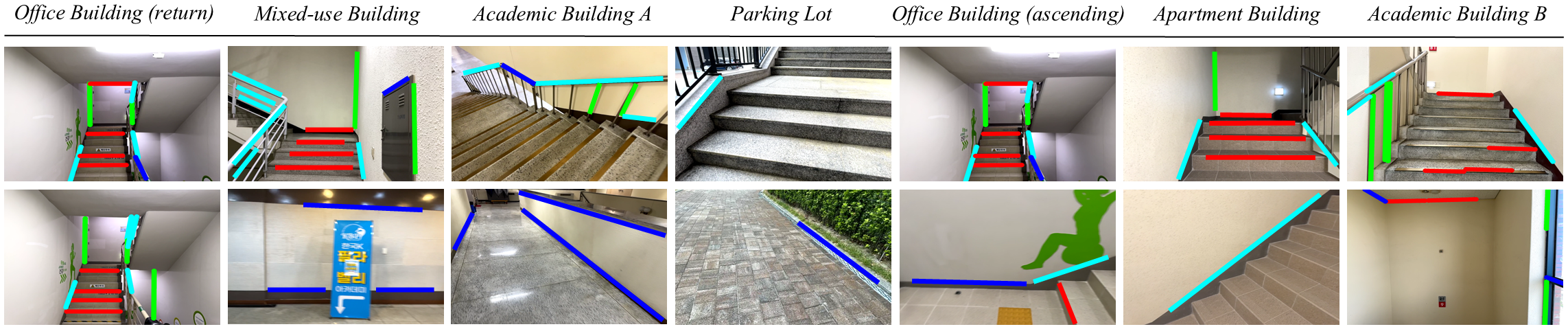
Representative frames from the seven SF-SLAM dataset sequences, overlaid with line clustering
Figure 3. Frames from the seven dataset sequences with SF-SLAM line clustering. Left: closed-loop start and end views. Right: open-loop views of the same corner on different stories.
Existing RGB-D benchmarks rarely include sustained inter-floor motion. The SF-SLAM dataset provides long multi-floor RGB-D sequences through staircases and ramps, captured with an iPhone 15 Pro Max (Stray Scanner, with ARKit trajectories). Closed-loop sequences return to the start pose, and open-loop sequences end at the same structural corner several stories higher.

Table I. Statistics of the SF-SLAM Dataset.
SequenceFramesTrajectory Length [m]Angular Travel [103 °]
Closed-loop sequences
Office Building (return)9330376.99612.605
Mixed-use Building645572.6712.146
Academic Building A2857119.6233.730
Parking Lot3185164.5962.934
Open-loop sequences
Office Building (ascending)4990205.5816.475
Apartment Building12223488.30217.898
Academic Building B3471107.6254.510

Results

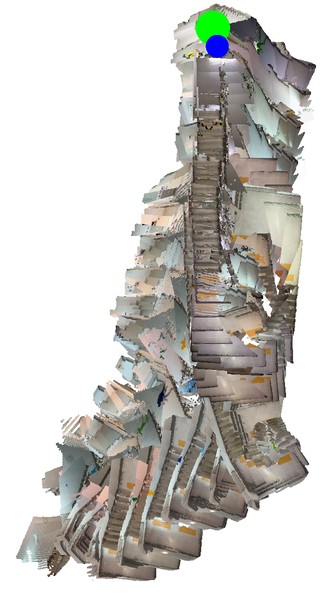
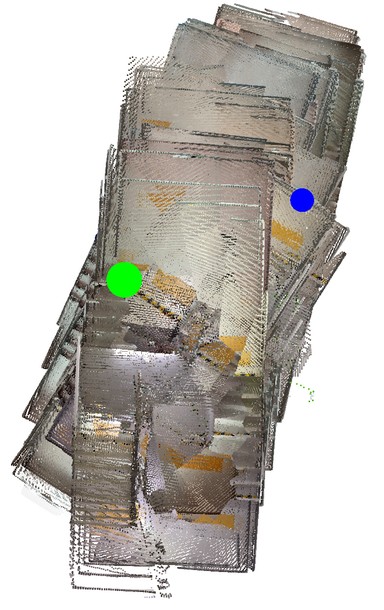
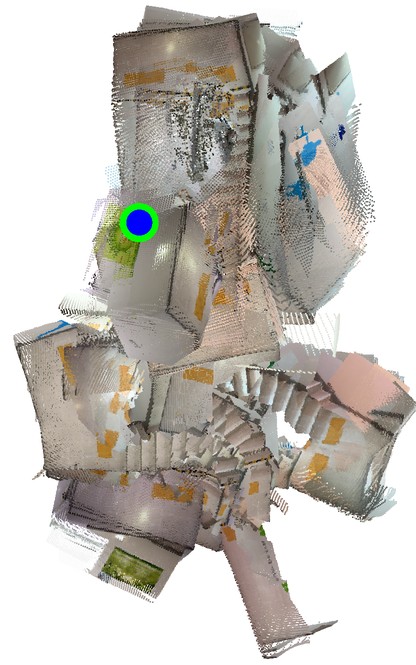
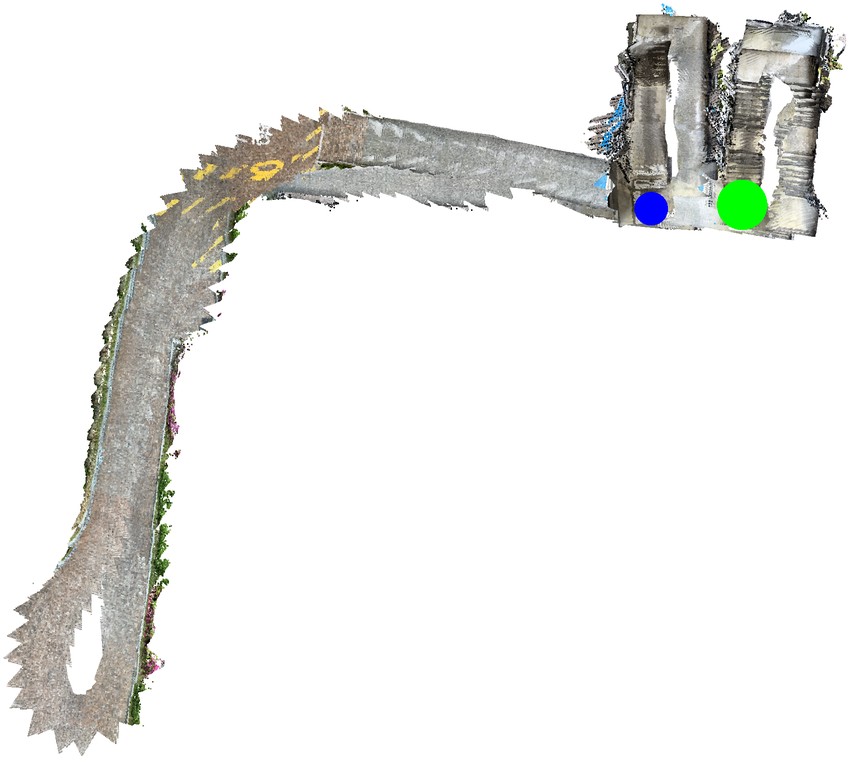
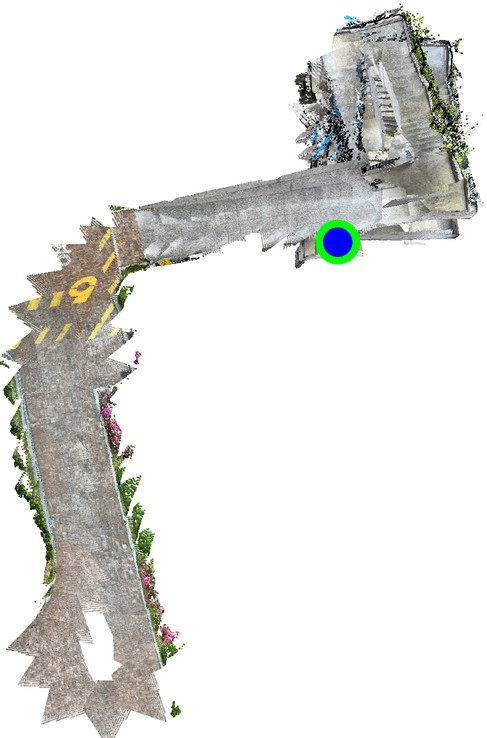
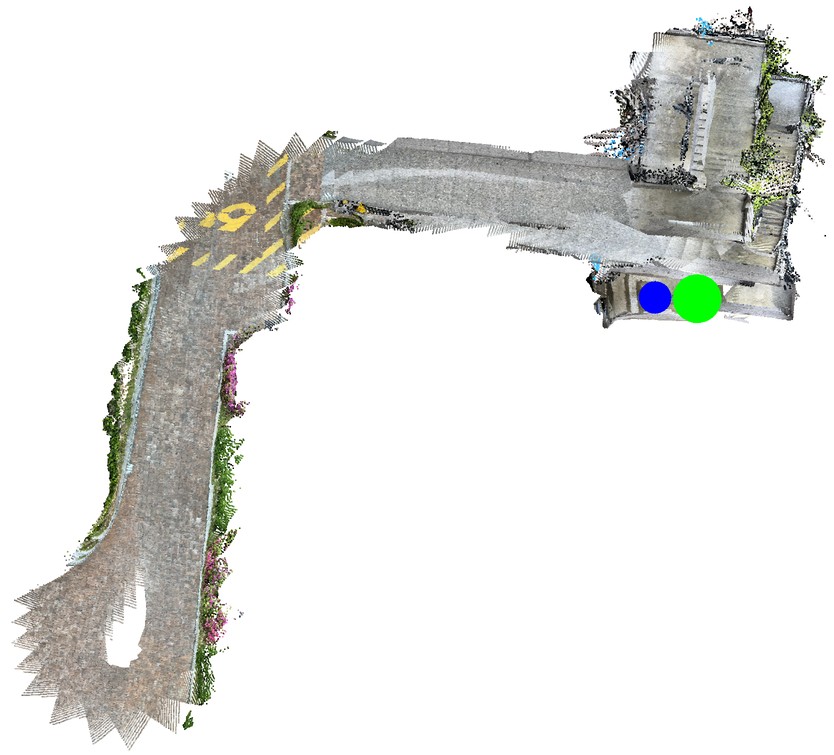
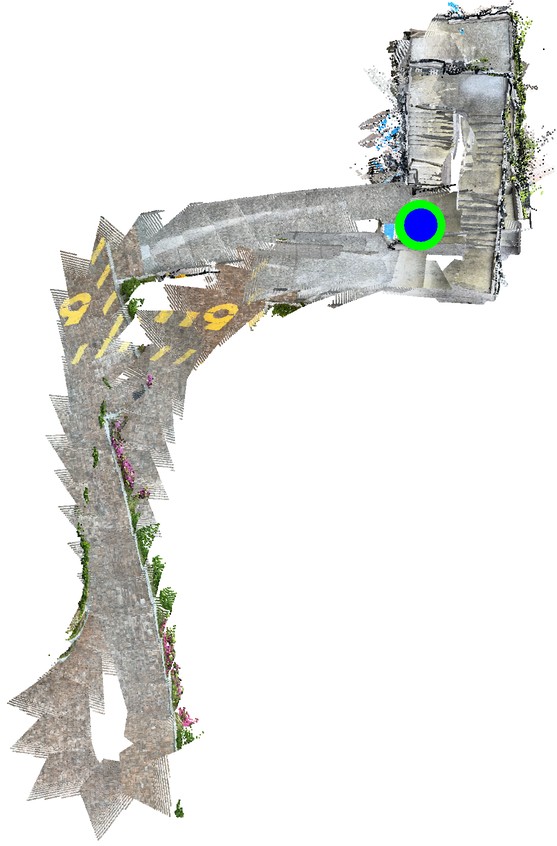
SF-SLAM achieves the lowest final drift error (FDE) on six of the seven sequences without a loop-closure module. Best is bold, second-best is underlined, and “–” marks tracking failure.

Closed-loop sequences

Table II. Evaluation results of FDE [m] on author-collected closed-loop sequences.
SequenceHI-SLAM2StructVIOORB-SLAM3DROID-SLAMPlanar-SLAMSF-SLAM (Ours)
Office Building (return)42.04010.2960.20121.3300.024
Mixed-use Building10.1861.39511.2763.4350.046
Academic Building A13.1121.1290.2180.26410.5680.089
Parking Lot6.9137.8470.0124.1230.0360.164
Office Building (return)
HI-SLAM2 top-down trajectory on Office Building (return)
HI-SLAM2
StructVIO top-down trajectory on Office Building (return)
StructVIO
ORB-SLAM3 top-down trajectory on Office Building (return)
ORB-SLAM3
DROID-SLAM top-down trajectory on Office Building (return)
DROID-SLAM
Planar-SLAM top-down trajectory on Office Building (return)
Planar-SLAM
SF-SLAM (Ours) top-down trajectory on Office Building (return)
SF-SLAM (Ours)
Mixed-use Building
HI-SLAM2 top-down trajectory on Mixed-use Building
HI-SLAM2
StructVIO top-down trajectory on Mixed-use Building
StructVIO
ORB-SLAM3 top-down trajectory on Mixed-use Building
ORB-SLAM3
DROID-SLAM top-down trajectory on Mixed-use Building
DROID-SLAM
Planar-SLAM top-down trajectory on Mixed-use Building
Planar-SLAM
SF-SLAM (Ours) top-down trajectory on Mixed-use Building
SF-SLAM (Ours)
Academic Building A
HI-SLAM2 top-down trajectory on Academic Building A
HI-SLAM2
StructVIO top-down trajectory on Academic Building A
StructVIO
ORB-SLAM3 top-down trajectory on Academic Building A
ORB-SLAM3
DROID-SLAM top-down trajectory on Academic Building A
DROID-SLAM
Planar-SLAM top-down trajectory on Academic Building A
Planar-SLAM
SF-SLAM (Ours) top-down trajectory on Academic Building A
SF-SLAM (Ours)
Parking Lot (outdoor)
HI-SLAM2 top-down trajectory on Parking Lot
HI-SLAM2
StructVIO top-down trajectory on Parking Lot
StructVIO
ORB-SLAM3 top-down trajectory on Parking Lot
ORB-SLAM3
DROID-SLAM top-down trajectory on Parking Lot
DROID-SLAM
Planar-SLAM top-down trajectory on Parking Lot
Planar-SLAM
SF-SLAM (Ours) top-down trajectory on Parking Lot
SF-SLAM (Ours)

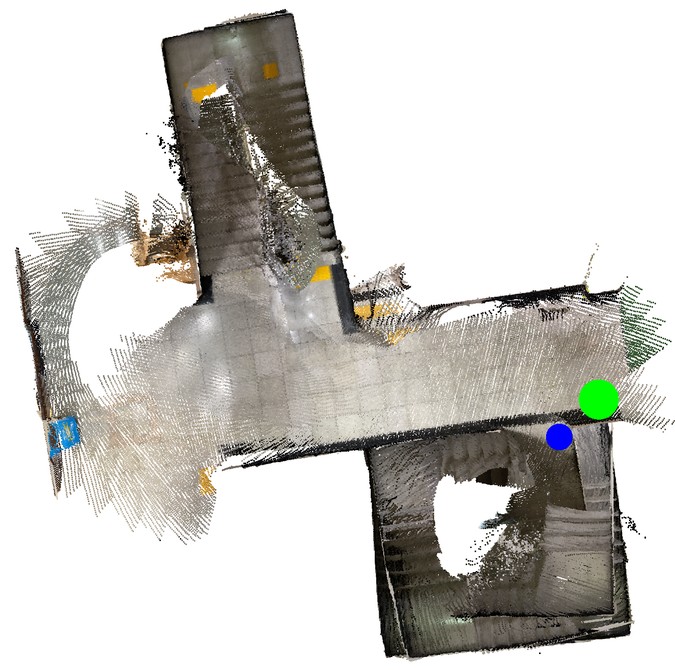
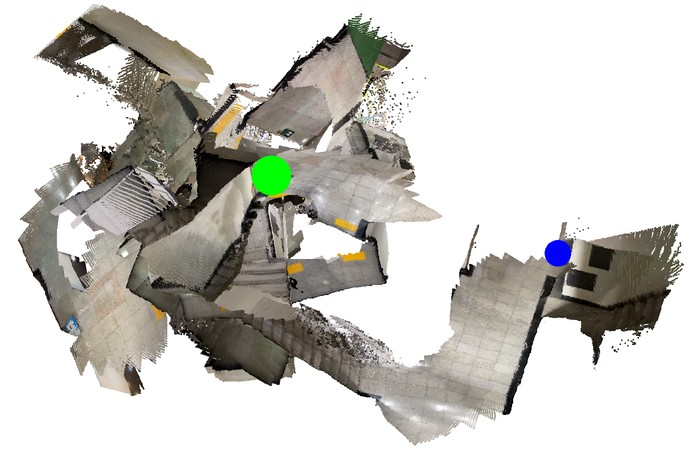
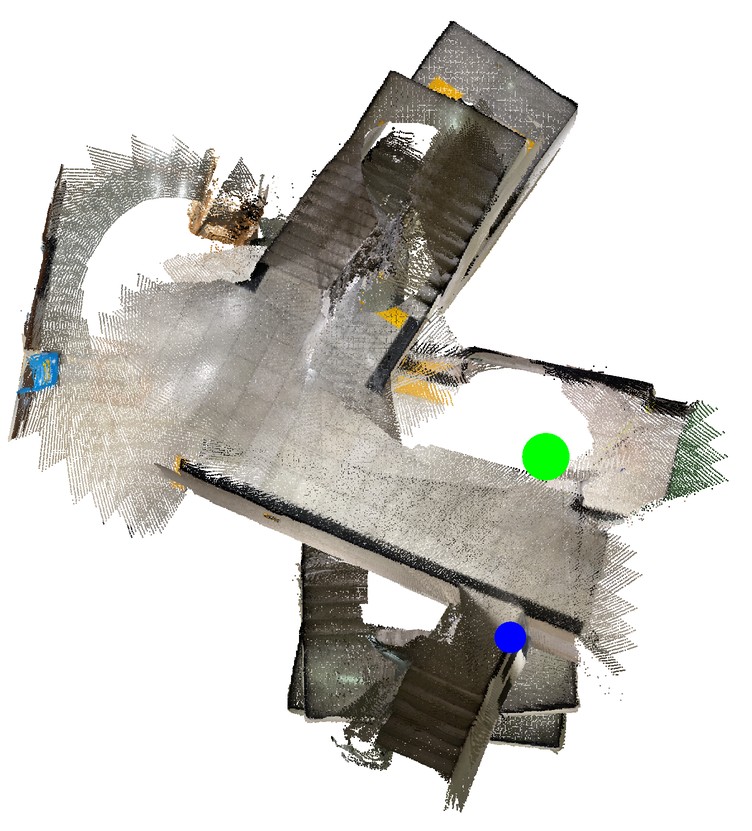
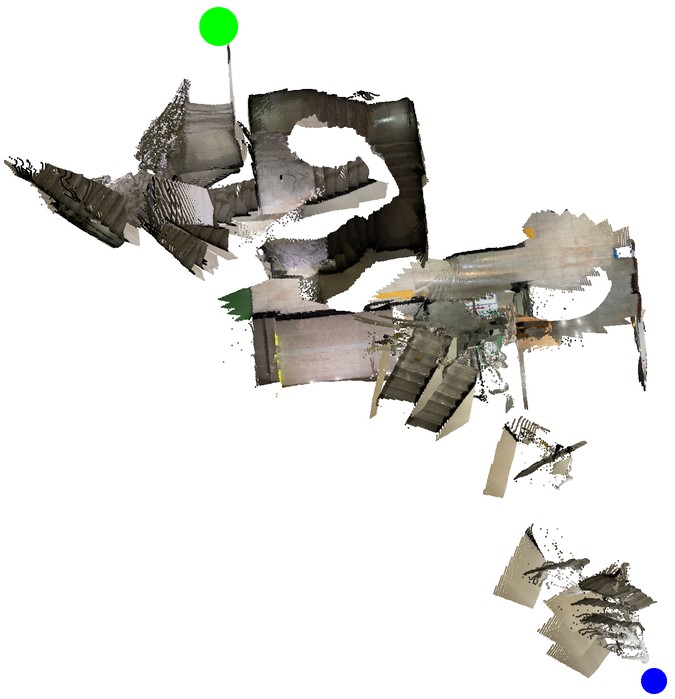
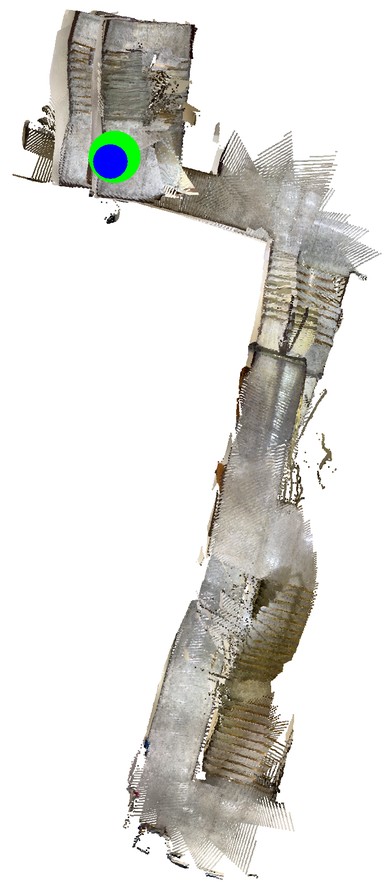
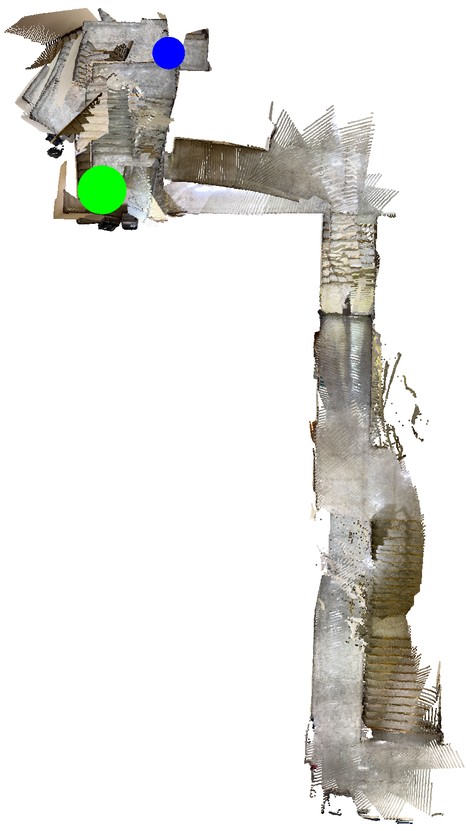
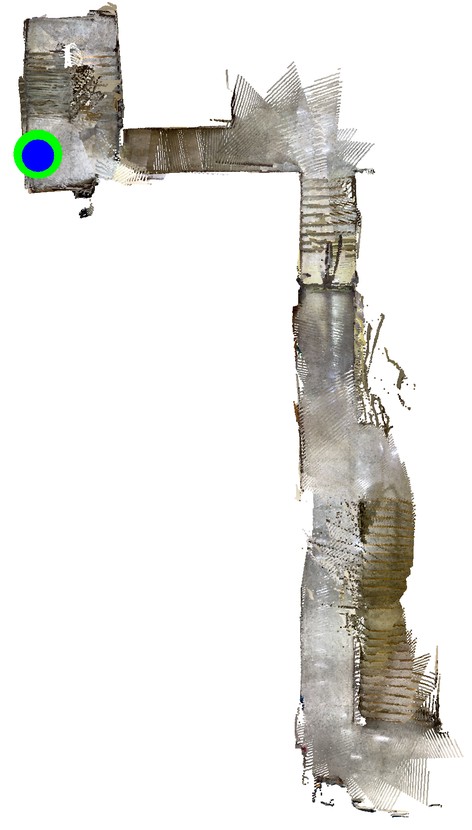
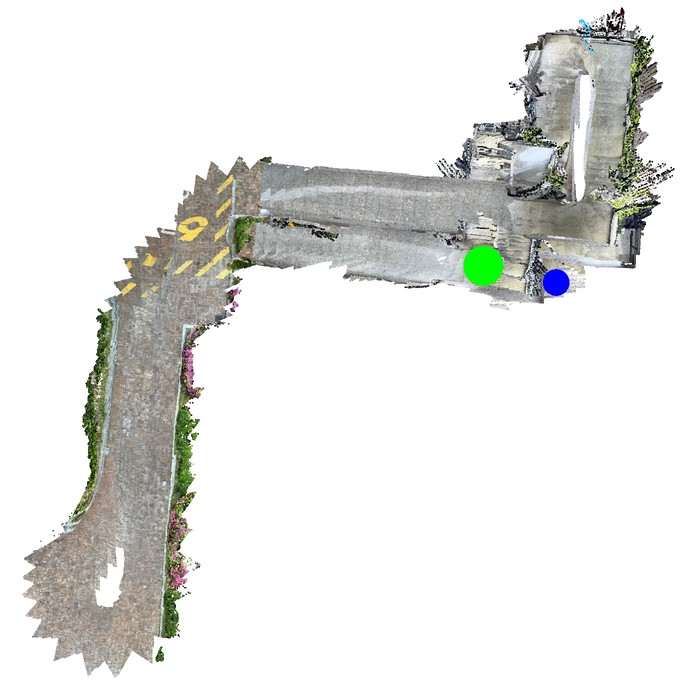
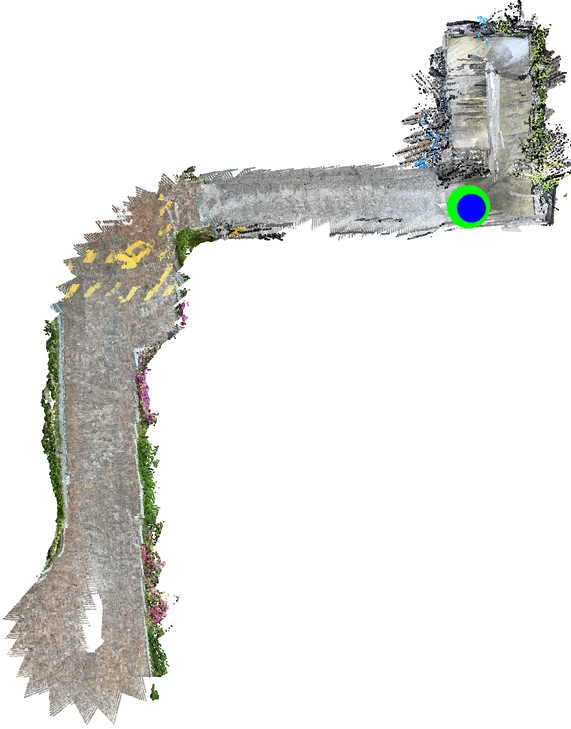
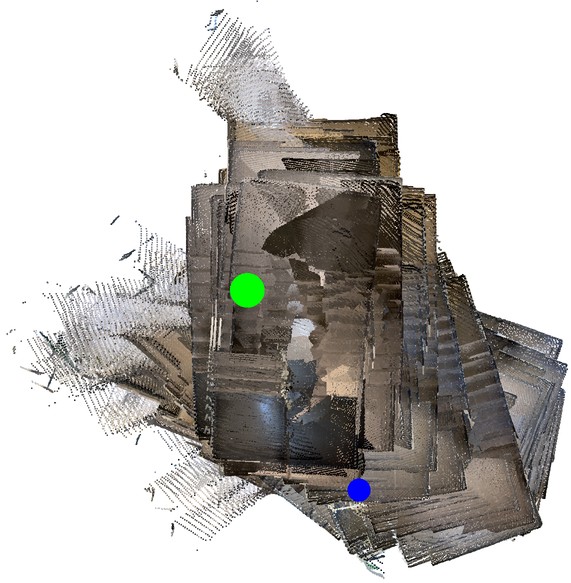
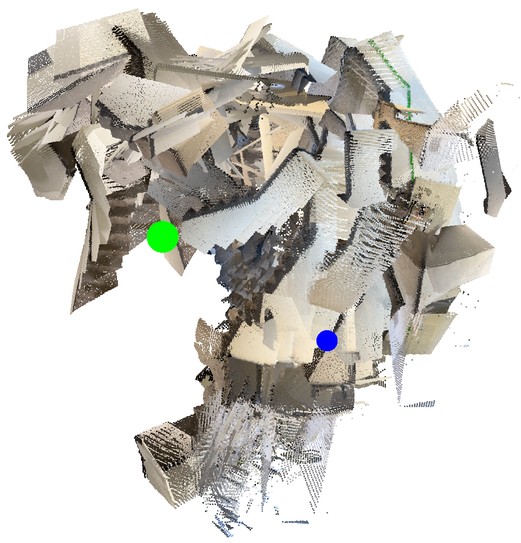
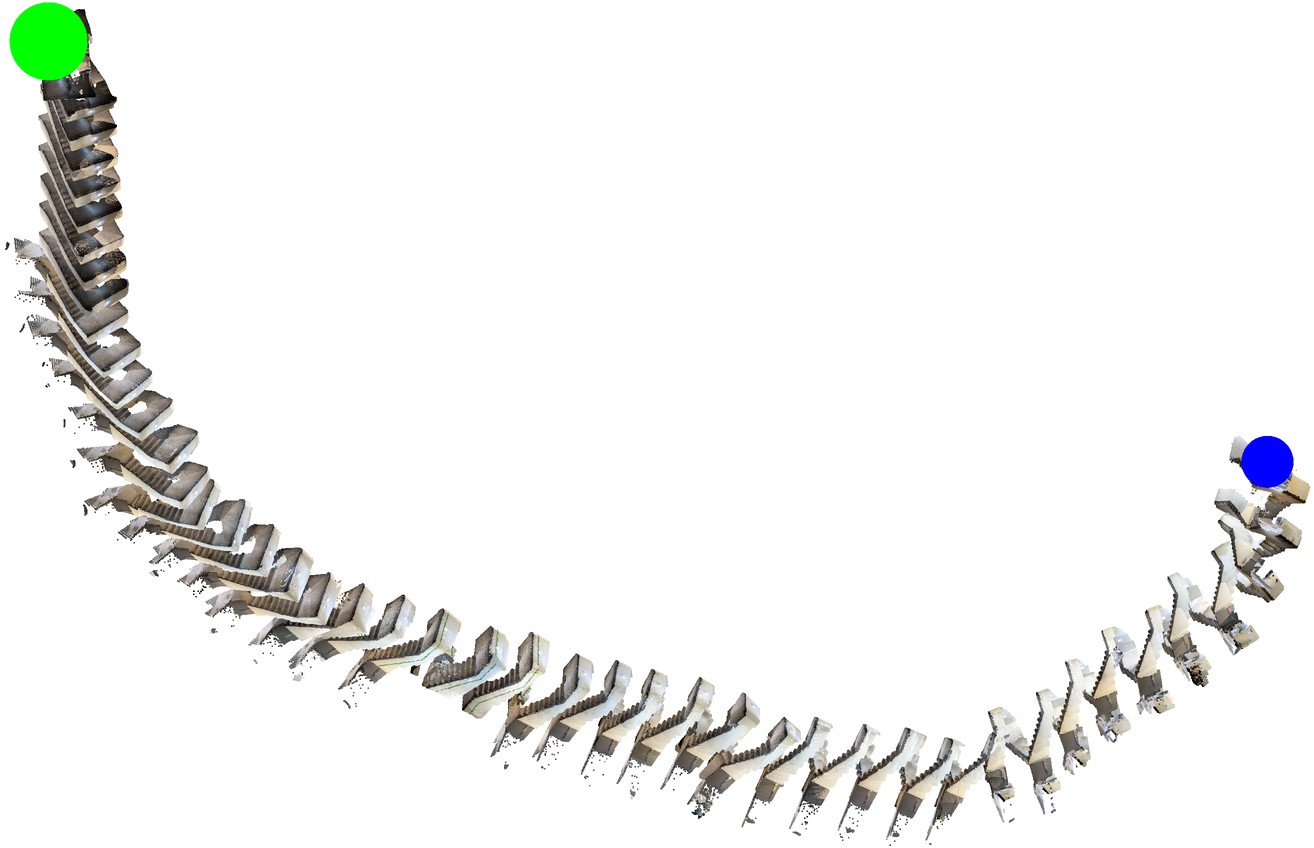
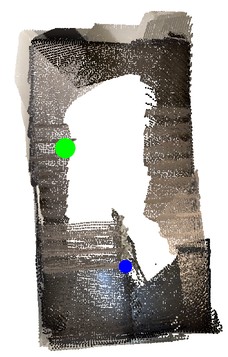
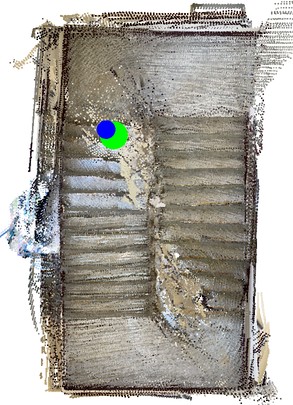
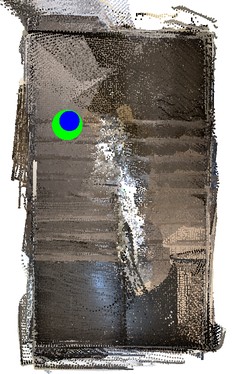
Figure 4. Closed-loop trajectories, top view. Green: start. Blue: end.

Open-loop (inter-floor) sequences

Table III. Evaluation results of FDE [m] on author-collected open-loop sequences.
SequenceHI-SLAM2StructVIOORB-SLAM3DROID-SLAMPlanar-SLAMSF-SLAM (Ours)
Office Building (ascending)34.1465.2547.06011.7630.215
Apartment Building38.7004.0653.75973.2040.070
Academic Building B0.0987.6315.2629.3500.090
Office Building (ascending)
HI-SLAM2 top-down trajectory on Office Building (ascending)
HI-SLAM2
StructVIO top-down trajectory on Office Building (ascending)
StructVIO
ORB-SLAM3 top-down trajectory on Office Building (ascending)
ORB-SLAM3
DROID-SLAM top-down trajectory on Office Building (ascending)
DROID-SLAM
Planar-SLAM top-down trajectory on Office Building (ascending)
Planar-SLAM
SF-SLAM (Ours) top-down trajectory on Office Building (ascending)
SF-SLAM (Ours)
Apartment Building
HI-SLAM2 top-down trajectory on Apartment Building
HI-SLAM2
StructVIO top-down trajectory on Apartment Building
StructVIO
ORB-SLAM3 top-down trajectory on Apartment Building
ORB-SLAM3
DROID-SLAM top-down trajectory on Apartment Building
DROID-SLAM
Planar-SLAM top-down trajectory on Apartment Building
Planar-SLAM
SF-SLAM (Ours) top-down trajectory on Apartment Building
SF-SLAM (Ours)
Academic Building B
HI-SLAM2 top-down trajectory on Academic Building B
HI-SLAM2
StructVIO top-down trajectory on Academic Building B
StructVIO
ORB-SLAM3 top-down trajectory on Academic Building B
ORB-SLAM3
DROID-SLAM top-down trajectory on Academic Building B
DROID-SLAM
Planar-SLAM top-down trajectory on Academic Building B
Planar-SLAM
SF-SLAM (Ours) top-down trajectory on Academic Building B
SF-SLAM (Ours)

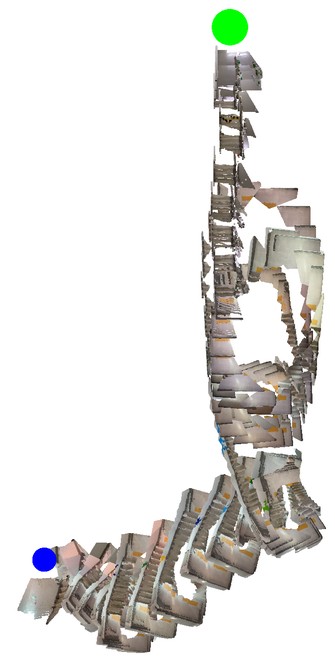
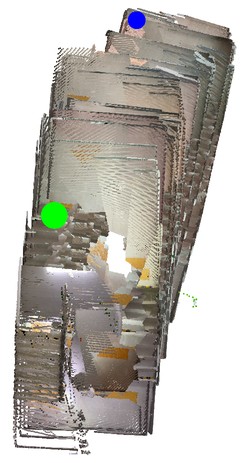
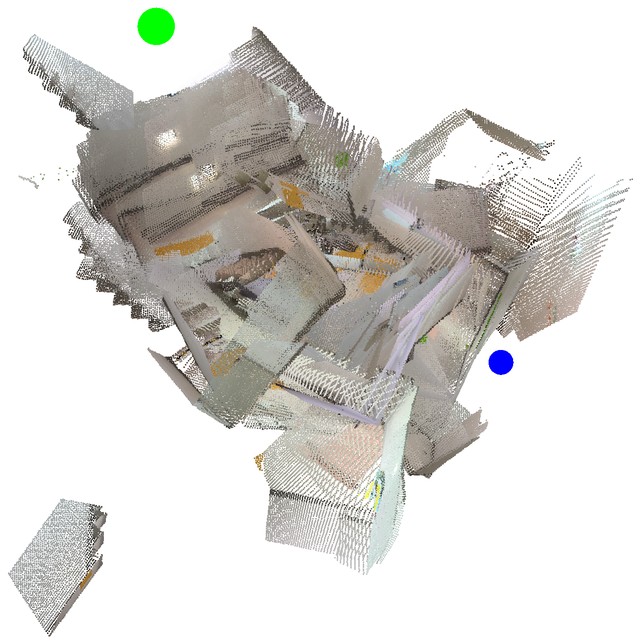
Figure 5. Open-loop trajectories, top view. Green: start. Blue: end.

3D map reconstructions of planes and lines on two sequences
Figure 6. Plane and line maps built by SF-SLAM on two sequences. Magenta is the estimated trajectory.

Ablation study on the use of line landmarks

Adding line landmarks to planes reduces FDE on every sequence. The gain is largest on Academic Building A, where the stairwell shows few large planes.

Table IV. Ablation study of FDE [m] on the use of line landmarks.
SequenceFinal Drift Error (FDE) [m] ↓
VIOVIO + Plane
(Ours w/o Line)
VIO + Plane + Line (Ours)
Office Building (return)0.9090.1310.024
Mixed-use Building0.4690.0510.046
Academic Building A0.5490.8400.089
Parking Lot0.7370.3120.164
Office Building (ascending)1.1190.3350.215
Apartment Building0.3370.1850.070
Academic Building B0.3240.2400.090

BibTeX

@article{sfslam2026,
  title   = {San Francisco SLAM: Structural Localization and
             Mapping Beyond the Manhattan World},
  author  = {Anonymous},
  journal = {Under review, IEEE Transactions on Robotics (T-RO)},
  year    = {2026}
}